
By Eteteonline Team
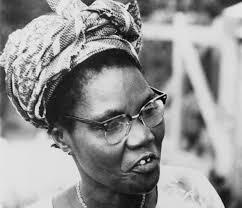
Chief Mrs Olufunmilayo Ransome-Kuti, who was born Frances Abigail Olufunmilayo Thomas, is a household name when the account of nationalism, political and civil rights advocacy, empowerment and emancipation of women in Nigeria is presented. She cooperated with Nigerian nationalists like Nnamdi Azikiwe and Obafemi Awolowo and pushed for self-rule, democracy, and social justice.
One of the most formidable women in Nigerian history, a teacher, nationalist, feminist, and mass mobiliser whose legacy still echoes today, she was born on 25th October 1900 into the Egba Clan of Abeokuta, Ogun State. She has been hailed as the doyen of female rights in Nigeria.
She was one of the few female Nigerians who had access to school at a time a female child education was exceedingly unpopular and unusual, and considered a burden on the family. She enrolled at Abeokuta Grammar School and later moved to the U.K. for her higher studies.
She was immensely enlightened by this unique chance, and when she returned to Nigeria, she became a symbol of hope for other women. Back in Nigeria, a tremendously inspired Funmi took up teaching as a vocation. It was her greatest gift to the women, for as she put only education could liberate them from their predicaments, disadvantaged and marginalized situations. She founded the first adult education program for women in Nigeria because she was passionate about providing high-quality education for women.
She was a fantastic politician, a campaigner for women’s rights, and a remarkable person. Ransome-Kuti was Nigeria’s top female nationalist leader during the colonial era and was well-known for her support of women’s rights, anti-colonial activity, and grassroots mobilization. She campaigned for the acknowledgment and respect of the rights of women.
She opposed the notion that women should exclusively support males in politics and promoted equal political representation, women’s voting rights, and girls’ education. According to her, women must not be treated as second-class citizens in their own country. Women must have a say in who governed them, and that meant being awarded the right to vote. Women must be educated, and that meant becoming an educationist herself.
Madam Ransome-Kuti escalated the battle for women’s rights in the 50s. represented Nigerian women at international gatherings in the Soviet Union, Asia, and Europe. She created the Nigerian Women’s Union and joined the National Council of Nigeria and the Cameroons. Her political activism later gained her the position of treasurer of the Egba Chapter of the National Council of Nigerian Citizens. She was a member of the Western State House of Chiefs. She established that women could be a political force, not merely supporters on the sidelines.
She supported mass action, particularly among market women and the urban poor, in contrast to many elites who operated covertly within hierarchies. She spearheaded a campaign of civil disobedience against the colonial administration and opposed arbitrary taxes levied on women. Her campaign included strikes, coordinated rallies, and boycotts against particular policies of the colonial authority. Her movement forced the Alake of Egbaland to abdicate temporarily in 1949, a rare win against colonial-backed traditional authority. Mrs Ransome-Kuti was arrested, harassed, and attacked many times by colonial officials.
Described as Nigeria’s wonder lady, she was a warrior for the rights and well-being of the common people. She spearheaded the Egba women’s fight. She created “the social welfare club for market women” which was a venue for agitation for the nation’s independence. The Abeokuta Women’s Union (AWU), which she created and oversaw, eventually had over 20,000 members.
She was a champion of the underprivileged and an advocate for the weak and vulnerable people. She carried her battle for human rights beyond the colonial era into post-independent Nigeria, a legacy she passed on to two of her children, Dr Beko Ransome-Kuti and Fela Anikulapo-Kuti. One of Africa’s earliest feminists, she influenced other women activists, like Margaret Ekpo and Gambo Sawaba.
This quintessential woman won various distinctions, among them Member of the Order of the Niger, Honorary Doctor of Laws of the University of Ibadan in 1968, and the Oloye of the Yoruba people.
In later years, she was hurled from a window during a military raid on her son Fela’s Kalakuta Republic. Her injuries from this attack played a part in her death on April 13, 1978.



Add comment