
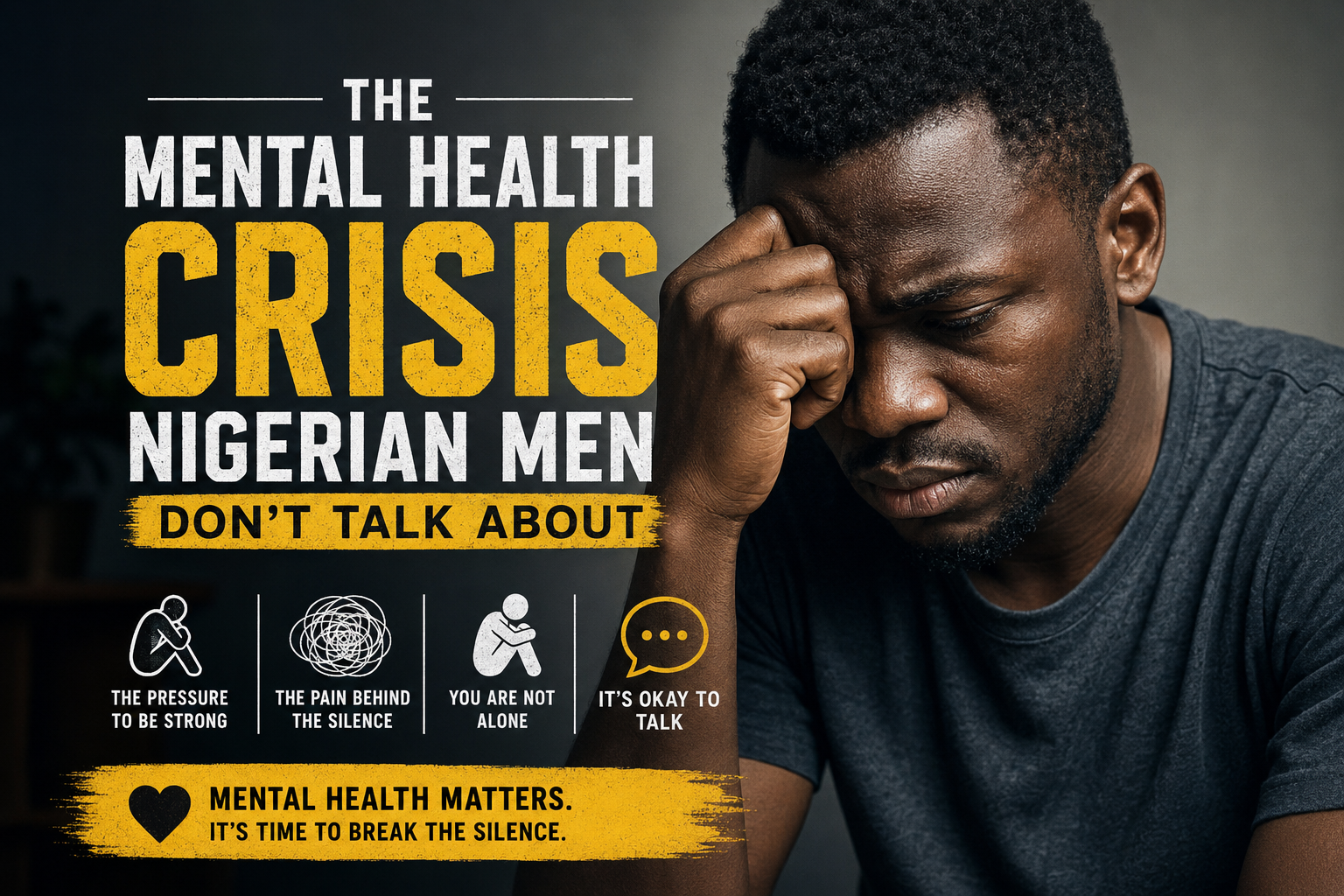
In many parts of Nigeria, men are expected to be strong all the time.
From childhood, many boys are raised with phrases like:
- “Man up.”
- “Men don’t cry.”
- “Be strong.”
- “Handle it yourself.”
Over time, these words shape how many Nigerian men deal with pain, pressure, fear, failure, and emotional struggles. Instead of speaking up, many suffer in silence.
Behind the appearance of strength, confidence, and survival, there is a growing mental health crisis affecting Nigerian men — one that society rarely talks about openly.
The Silent Pressure on Nigerian Men
For many Nigerian men, life feels like an endless responsibility.
A man is expected to:
- provide financially,
- support family members,
- succeed in career or business,
- hide emotional weakness,
- survive economic hardship,
- and still appear mentally strong.
In a country facing inflation, unemployment, insecurity, and rising living costs, the pressure has become overwhelming for many young men.
Yet, despite these realities, mental health discussions among men remain limited.
Many Nigerian men are struggling emotionally, but they do not know how to express it without fear of being judged or mocked.
Why Many Men Suffer in Silence
One major reason is culture.
In many African societies, masculinity is often linked to emotional toughness. Vulnerability is sometimes seen as weakness.
As a result:
- depressed men pretend to be fine,
- anxious men hide behind humor,
- struggling men isolate themselves,
- and emotionally exhausted men continue suffering quietly.
Some turn to:
- alcohol,
- drug abuse,
- gambling,
- aggression,
- internet addiction,
- or dangerous lifestyles as coping mechanisms.
Unfortunately, society often notices the behavior without addressing the emotional pain behind it.
Economic Hardship and Mental Health
Nigeria’s economic situation has intensified emotional stress among men.
Many young graduates cannot find stable jobs. Some workers can barely survive on their salaries. Others feel pressured to appear successful on social media even when they are financially struggling.
The pressure to “make it” quickly has pushed some young men into:
- fraud,
- crime,
- depression,
- or severe anxiety.
Social media has also created unrealistic standards of success. Many men compare themselves constantly to wealthy influencers, celebrities, and peers displaying luxury lifestyles online.
This comparison culture quietly damages self-esteem and mental well-being.
The Mental Health Problems Many Men Ignore
Mental health struggles do not always look obvious.
A man may still smile, go to work, post online, and interact normally while silently battling emotional pain.
Some common issues affecting Nigerian men include:
- depression,
- anxiety,
- emotional burnout,
- loneliness,
- anger problems,
- addiction,
- and suicidal thoughts.
Sadly, many men avoid seeking help because they fear embarrassment or stigma.
In some communities, mental health problems are still misunderstood or dismissed entirely.
Relationships and Emotional Isolation
Many Nigerian men also struggle emotionally in relationships.
Some men feel they cannot express vulnerability because they fear losing respect. Others bottle up emotions until frustration turns into anger, withdrawal, or emotional breakdown.
The truth is that emotional suppression does not make pain disappear.
It only hides it temporarily.
Healthy communication, emotional intelligence, and supportive relationships are important for mental well-being.
Why Mental Health Awareness Matters
Ignoring men’s mental health does not make the problem go away.
Unaddressed emotional struggles can contribute to:
- domestic violence,
- substance abuse,
- crime,
- broken relationships,
- poor parenting,
- and suicide.
A healthier society requires emotionally healthy men.
Mental health awareness should not only focus on crises after they happen. Prevention, education, and open conversations are equally important.
What Needs to Change
Nigeria needs more open conversations about men’s emotional well-being.
Parents should raise boys to express emotions responsibly instead of suppressing everything.
Schools, religious institutions, workplaces, and communities should also encourage mental health education and support systems.
Men should be reminded that:
- seeking help is not weakness,
- therapy is not shameful,
- emotions are normal,
- and mental health matters just as much as physical health.
Strong men are not those who never struggle.
Strong men are those willing to confront their struggles in healthy ways.
Final Thoughts
Many Nigerian men are carrying emotional burdens nobody sees.
Some are battling financial pressure. Some are fighting loneliness. Others are silently losing hope while pretending everything is fine.
The mental health crisis among Nigerian men is real, even if society rarely talks about it openly.
Perhaps the most dangerous part of the crisis is not the suffering itself — but the silence surrounding it.
And until that silence is broken, many men will continue fighting invisible battles alone.



Add comment