
By Eteteonline
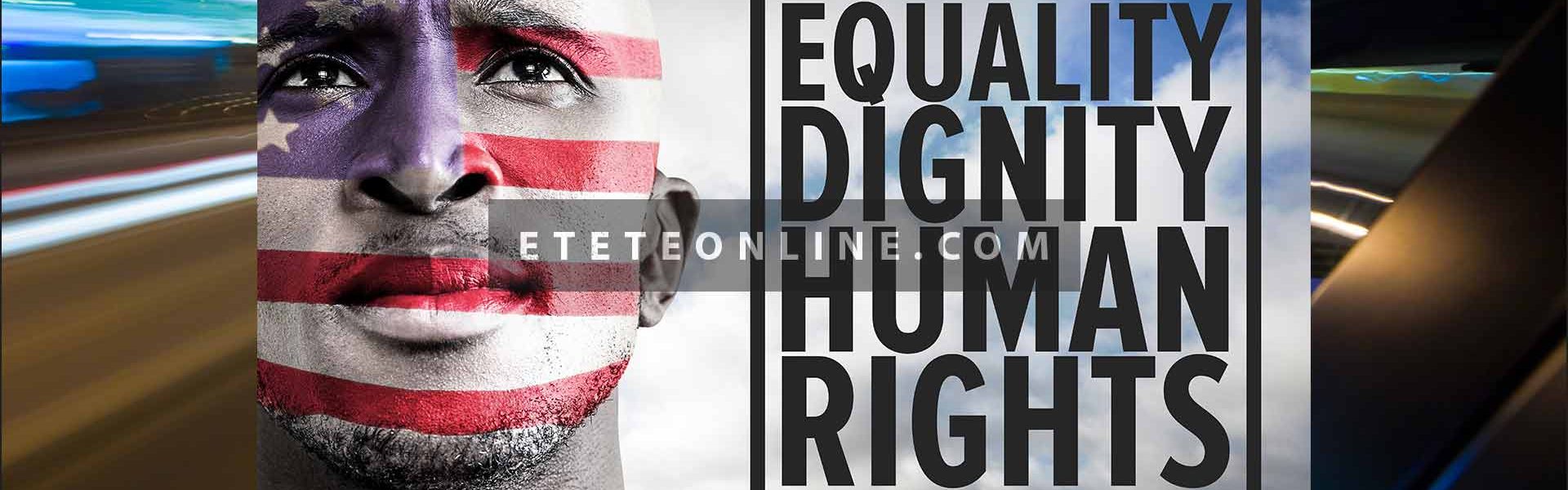
Every year on December 10, World Human Rights Day is observed in many ways across the globe. The United Nations General Assembly adopted the Universal Declaration of Human Rights (UDHR) on this day. The Declaration’s concepts and precepts are reaffirmed, and various nations reevaluate and consider the status of human rights both domestically and internationally.
The necessity for respect for and international protection of human rights was highlighted by the numerous atrocities committed against people during World War II. The Universal Declaration of Human Rights was declared by the UN General Assembly on December 10, 1948 (General Assembly Res. 217 A (111)) as follows:
“A common standard of achievement for all peoples and all nations, to the end that every individual and every organ of society, keeping this Declaration constantly in mind, shall strive by teaching and education to promote respect for these rights and freedoms and by progressive measures, national and international, to secure their universal and effective recognition and observance, both among the peoples of member states themselves and among the peoples of territories under their jurisdiction.”
According to the Declaration, every human being is born free, has equal rights and dignity, and is entitled to these freedoms without any kind of discrimination. Thirty articles that outline fundamental freedoms and human rights make up the UDHR. Economic, social, and cultural rights (Articles 22 to 27 of the Declaration) and civil and political rights (Articles 2 to 21 of the Declaration) are the two main types of rights that are covered. The following are the political rights:
- Right to life, liberty, and security of persons (Article 3).
- Freedom from slavery or servitude (Article 4).
- Prohibition against torture, inhuman and degrading treatment or punishment (Article 5).
- Recognition as a person before the law (Article 6).
- Equality before the law and equal protection of the law without any discrimination (Article 7).
- Effective remedy before the national tribunals (Article 8).
- Freedom from arbitrary arrest, detention, or exile (Article 9).
- Right to a fair and public hearing by an independent and impartial tribunal (Article 10).
- Presumption of innocence until proved guilty in a public trial with all guarantees necessary for defence in criminal cases (Article 11, Para 1).
- Freedom from ex-post facto laws (Article 11, Para 2).
- Right to privacy, family, home, and correspondence (Article 12).
- Right to freedom of movement and residence within the borders of a State (Article 13, Para 1).
- Right to leave any country, including his own, and to return to his country (Article 13, Para 2).
- Right to seek and to enjoy in other countries asylum from persecution (Article 14, Para 1).
- Right to a nationality (Article 15).
- Right to marry and to found a family (Article 16).
- Right to own property (Article 17).
- Right to freedom of thought, conscience, and religion (Article 18).
- Right to freedom of opinion and expression (Article 19).
- Right to freedom of peaceful assembly and association (Article 20).
- Right to participate in the Government of his country (Article 21).
The Declaration also provides for economic and social rights. These are:
- Right to social security (Article 22).
- Right to work and free choice of employment (Article 23).
- Right to rest and leisure (Article 24).
- Right to a standard of living adequate for the health of himself and of his family (Article 25).
- Right to education (Article 26).
- Right to participate in cultural life (Article 27).
Right to good social and international order (Article 28).
This was one of the UN’s greatest accomplishments in the area of human rights and a watershed in contemporary international human rights legislation. Schwebel correctly said that the 1948 Universal Declaration of Human Rights was the first document to express current human rights law. The right to direct access to tribunals and other international fora is granted by a number of subsequent human rights accords.
Nigeria, like many other nations, adopted strong human rights legislation in support of the UDHR 1948. Nigeria’s Constitution guarantees human rights. The 1999 Constitution’s Chapter IV outlines the following essential rights:
- Right to life
- Right to dignity of the human person (prohibits torture, inhuman and degrading treatment, and slavery)
- Right to personal liberty
- Right to fair hearing
- Right to private/family life
- Right to freedom of thought, conscience, and religion
- Right to freedom of expression
- Right to peaceful assembly and association
- Right to freedom movement
- Right to freedom from discrimination
- Right to acquire and own property in Nigeria.
In Nigeria, further national legislation that safeguards human rights includes:
- Human Rights Commission Act 1995 as amended in 2010
- Child Rights Act 2003
- Violence Against Persons (Prohibition) Act 2015
- Administration of Criminal Justice Act 2015
- Anti-Torture Act 2017
The following are examples of international human rights frameworks ratified by Nigeria:
- International Covenant on Civil and Political Rights (ICCPR)
- International Covenant on Economic, Social, and Cultural Rights (ICESCR)
- Convention on the Rights of the Child (CRC)
- Convention on the Elimination of All Forms of Discrimination Against Women (CEDAW)
- Convention Against Torture (CAT)
- African Charter on Human and Peoples’ Rights (Ratification and Enforcement) Act 1983
Nigeria’s human rights protection institutions include:
- National Human Rights Commission
- Public Complaints Commission
- National Assemblies Committees on Human Rights
- The Court
- National Agency for the Prohibition of Trafficking in Persons (NAPTIP)
Nevertheless, the laws’ application is frequently lax, which results in numerous violations, especially by state and non-state actors in conflict areas. Human rights abuses have occurred since democracy was restored in 1999. Arrests, detentions, and abuses by security forces are examples of violations committed by state agents. Authority critics and journalists were detained arbitrarily, arrested, and charged. Security personnel used disproportionate force to put an end to the protests, arrested demonstrators, and mistreated them.
There have been multiple instances of violations of the right to freedom of expression. A wide range of internet contacts is illegal under Nigeria’s Cybercrimes Act. Harassment, intimidation, and arbitrary arrests are commonplace for journalists and activists.
Reports of extrajudicial executions, torture, wrongful detentions, and police abuses (SARS/SWAT) sparked national demonstrations in October 2020.
In Nigeria, non-state actors frequently violate human rights. Mob violence, deaths, and arbitrary security force killings continue to be serious issues. Many of the victims were accused of blasphemy, witchcraft, and stealing, among other offences, and were either slain or tortured to death.
Hundreds of people have died in several towns as a result of gun attacks. Gunmen have kidnapped thousands of youngsters and only released them after being paid a ransom. More than 80 schoolgirls remain unaccounted for ten years after 276 were kidnapped by Boko Haram militants in April 2014, in Chibok, Borno State.
The Northwest region of Nigeria is still plagued by killings, kidnappings, and deadly raids by so-called bandit gangs that arose after years of warfare between farmers and herders. Human rights observance in the impacted areas has been weakened by separatist agitations in the Southeast and Boko Haram/ISWAP attacks in the Northeast. Mass displacement, kidnappings, and civilian casualties result from attacks, banditry, farmer-herder conflicts, and separatist agitations.
One of the primary issues is still disrespect for the law. Rights protections are undermined by corruption, sluggish legal proceedings, and impunity for offenders.
Overcrowding, filthy prisons with subpar conditions, and extended pre-trial detention are the results of inadequate detention facilities.
There is still discrimination against people, particularly women. Female genital mutilation, child marriage, and violence against women continue to exist.
Proper oversight, accountability, and adherence to the rule of law can all help to promote and uphold human rights in Nigeria. Promoting and defending rights is a crucial function of the National Human Rights Commission (NHRC). An extrajudicial tool for upholding and promoting human rights is the NHRC. Additionally, it offers opportunities for public education.
Human Rights Watch and Amnesty International are two examples of civil society organizations and non-governmental organizations (NGOs) that support the monitoring, documentation, and advocacy of human rights. Nigeria’s human rights situation is frequently covered by international organizations and UN entities.
Upholding civil and political rights, combating gender-based violence, safeguarding vulnerable groups, and promoting economic fairness should continue to be top priorities as World Human Rights Day 2025 is observed on December 10.
Human rights must be upheld by the state through its law enforcement. To lessen financial hardship and the causes of human rights abuses, the government should address socioeconomic issues, including poverty and inequality.
There should be a sustained awareness campaign on the need to promote and protect human rights by state and non-state actors. Human rights violators, especially state agents, ought to be held responsible for their deeds. Reparations and legal remedies ought to be available to victims.



Add comment