
By Eteteonline
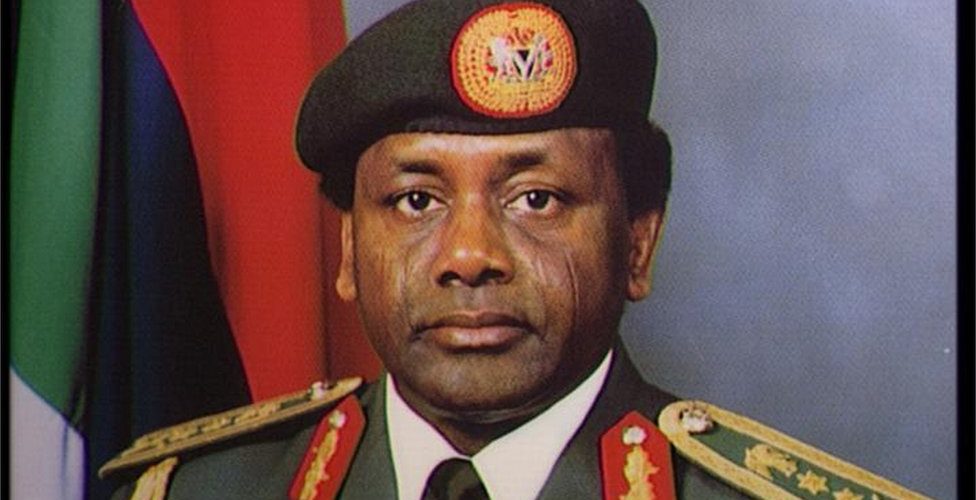
In his maiden address on November 18, 1993, the Head of State, General Sani Abacha, made a solemn promise to the Nigerian people:
“…a constitutional conference with full powers would be established soon to determine the future constitutional structure of Nigeria. The constitutional conference will also recommend the method of forming parties, which will lead to the ultimate recognition of political parties formed by the people.”
In another address to the nation, General Abacha stated the rationale and wisdom behind the constitutional conference. It was the best option for Nigeria in the circumstances:
“Guided by mature advice from the best political insights available in the country, we considered all options that could move the nation forward. Some of the options were practicable but undemocratic. Others were emotional among a vocal few, but not practicable. After exhaustive appraisal of all the options, we recognized as our best choice the convention of a constitutional conference.”
This position of government was restated by the Chief of General Staff in an address to traditional rulers and elders at Benin. He said that a national constitutional conference was the most expedient way of moving the country forward because it “will give Nigerians the opportunity to decide how best they want to be governed so that we can all have a sense of belonging to the Nigerian nation.”
With this firm promise, the Abacha Administration set out on the task with commitment and determination.
The government named a 19-member National Constitutional Conference Commission (NCCC) with Justice Saidu Kawu as its chairman. This commission was vested with the responsibility of organizing the conference.
As it was usual for Nigerians, some greeted this development with optimism and others with skepticism, especially as the conference did not commence on the original date. But these skeptics were to be proved wrong later. The administration took another bold step forward by setting up the Constitutional Conference Election Committee to organize the election of delegates to the conference. The modalities were put in place, and the CCEC swung into action. Elections were conducted in wards across the country, and delegates emerged.
In all, there were 369 delegates to the Constitutional Conference, of which 273 were elected and the others nominated by the government. The membership of the constitutional conference cut across all facets of the Nigerian society, traditional rulers inclusive. Calls by some individuals and groups that the elections to the conference be boycotted were ignored by many people.
The task of moving the nation forward actually gathered momentum on Monday, June 27, 1994, when General Sani Abacha inaugurated the Constitutional Conference with Justice Adolphus Karibi-Whyte as its chairman. At the inauguration, General Abacha said the government was sincere in trying to move the country forward, and conference delegates should not allow themselves to be used as a stumbling block to the attainment of this noble goal:
“You should not allow yourselves or this forum to be used to perpetuate acts inimical to the smooth conduct of the programme of this conference.”
Some were doubtful of the government’s sincerity in organizing this conference. The Head of State did not leave them out of his admonition. To these skeptics and cynics, he said:
“No amount of assurances that our rescue mission is short, decisive, and conclusive seems to persuade the regular cynics who find the media speculation of our motives and plots very financially rewarding.”
After the inauguration, the work of the constitutional conference began with the formation of several committees to handle specific aspects of national issues. Some sessions were very stormy, but in a brotherly spirit, the issues were sorted out, and decisions were arrived at on the basis of consensus. This explains why the conference proceedings were generally peaceful, and controversial matters were resolved through compromise.
While deliberations were going on at the conference, some members of the public and some sections of the media launched an attack on its viability.
They gave the impression that the conference would not succeed. But the Head of State said that the conference was the only viable option if Nigeria was to avoid the path of chaos and anarchy:
“It is important to re-emphasize that the constitutional conference remains the only viable option if we are to avoid the path of chaos and anarchy. I urge all well-meaning Nigerians to continue to give the conference the necessary support to carry through its assignment. The government is impressed with the seriousness so far demonstrated by the conference. Our commitment to ensuring its success is now irreversible. In the circumstance, it should now be helpful for individuals and groups across the country to participate in a healthy consideration of the issues being canvassed.”
The criticisms and distractions notwithstanding, General Abacha said the government would continue to search for a lasting national solution through the constitutional conference:
“Despite several distractions, the focus of the government remains a search for a lasting national solution. To this end, the constitutional conference is the high point of our programme of action. Its aim at bringing together representatives of all our people for a national dialogue on a wide spectrum of issues which have confronted us as a nation has been successful. The conference is unique in its form and circumstance. The membership, which cuts across all strata of our society, has not been based on any political party or interest group. So far, the high quality of its membership has been the cast-iron shield that has protected the conference in the face of the constant battering by its detractors. We pray all will be well with this veritable historic institution.”
General Abacha stated that the conference was not just another constitution-making body, but a forum that would debate the fundamental issues facing the nation:
“The constitutional conference … is central to our planned return to democratic governance. Perhaps the appellation ‘constitutional’ has misled many to think that the conference will merely draft yet another constitution. Far from it, we intend that the conference will debate the fundamental issues that will enable us to move forward in unity and harmony, with justice and equity.”
The conference was originally scheduled to last for four months. This was, however, not possible due to the time required by the delegates to do a thorough and perfect job, as well as consult with their constituencies.
The debates progressed, and the conference proceeded to a wonderful conclusion. The draft constitution was ready for submission to the Head of State, General Sani Abacha, on June 27, 1995, exactly one year after the inauguration.
History was made in Nigeria on June 27, 1995, when the Draft Constitution was submitted to General Sani Abacha at the Africa Hall of the International Conference Center, Abuja, in a ceremony that lasted about two hours. In a speech to the gathering, which included former Heads of State, Diplomats, Ministers, State Administrators, and traditional rulers among others, the chairman of the National Constitutional Conference Commission, Justice Saidu Kawu, lashed out at a section of the Nigerian media and accused them of engaging in “terrorism against national interest”. He said the sustained attack of the press against the commission gave the impression that the country would break up. This act of un-patriotism, he said, made some Nigerians doubt the success of the constitutional conference.
Justice Adolphus Karibi-Whyte, the chairman of the constitutional conference, said at the presentation ceremony that it was unfair to condemn the country’s leadership. He said further that in spite of criticisms against the constitutional talks and the delegates, the conference went on well and ended successfully.
The Draft constitution, he said, was entirely the product of Nigerians for Nigerians based on the country’s political experience. According to the conference chairman, some of their decisions included the principle of rotation of power in the elective office of the president of the country, governors of states, and chairmen of Local Councils, a multi-party system, proportional representation of parties in government, and multiple vice presidents. Justice Karibi-Whyte later handed over the Draft Constitution and the report of the conference to the Head of State, General Sani Abacha.
General Abacha expressed happiness and satisfaction over the successful completion of the work of the conference. He recalled that there was a cloud of uncertainty hanging over the nation and that the constitutional conference provided the meeting point for Nigerians “to commence the process of national reconciliation.”
He said further:
“It is therefore a matter of personal pride to me and to our entire nation that the National Constitutional Conference has completed its deliberations and handed over to me a few moments ago, a certified copy of the Draft Constitution.”
The Head of State said dialogue remained the most viable option in the resolution of societal conflicts, and this was what the conference was set out to achieve:
“Dialogue is the basic principle on which democracy is founded. It must be encouraged and sustained for our nation to develop and prosper.”
The high quality of debates at the conference and the sense of accommodation exhibited by the delegates also received the commendation of General Abacha:
“I followed your debates with keen interest and had cause to commend the high quality of discussions that went on. I commend your sense of accommodation of divergent views and the candour with which you conducted the business of the conference. I salute your courage and sense of patriotism in accomplishing this important national assignment.”
General Abacha told the gathering that the Provisional Ruling Council shall, within three months of the submission of the draft constitution, complete deliberation on it and give its approval. This will be followed by the announcement of a handover timetable to be made on October 1, 1995. In the meantime, the Head of State, desirous of demonstrating the commitment of his administration to the democratization process, made the following pronouncements:
“I hereby lift the ban on political parties. To ensure the success of our transition programme, therefore, I appeal to the members of our political class to exhibit a sense of maturity, tolerance, and orderliness in the conduct of their affairs.”
The submission of the Draft Constitution to the Head of State, notwithstanding the cynicism expressed by some, marked a major step in the task of moving Nigeria forward.
In another development, the Abacha administration maintained that it was determined to actualize its good intentions to bequeath an enduring democracy to Nigerians and prove cynics wrong. The Head of State, General Sani Abacha, said this at a dinner held in honour of members of the Constitutional Conference at Sheraton Hotel, Abuja. He said such cynicism would be converted into optimism:
“Let me assure all and sundry that we are now ready and determined to move into the next stage of our programme, which will witness momentous events and actions.”
General Abacha said further that the Draft Constitution was “the most innovative of all our constitutional experiments” and hoped that it would meet our expectations for a united Nigeria:
“The Draft Constitution is a reflection of our internal capacity to take our destiny into our hands, away from the climate of mutual suspicion and conflicts, towards the path of national self-confidence and reconciliation.”
The presentation of the Draft Constitution was a thing of joy to him, General Abacha said, and was a testimony of his administration’s success in its efforts at
“Channeling the energies of our people towards meaningful interaction in charting the course for the future of our country through dialogue”. Thereafter, the Head of State called on Nigerians to come up with comments and suggestions on the provisions of the Draft Constitution. This was to ensure a wider participation of Nigerians in the constitution-making process. In response to this call, workshops and seminars were organized, and input from members of the public was collated. A report was prepared from this and submitted to the government for consideration. It was the first time in the history of this country that the people were given such a privilege to contribute extensively to the basic document that would govern them.
The October 1, 1995 Historic Independence Day Broadcast
On June 27, 1995, when the draft constitution was presented to him, the Head of State promised that the administration would announce a transition to civil rule timetable on October 1, 1995. The transition programme, by its design, would be expected to lay a solid foundation for an enduring democracy. On October 1, 1995, the Head of State, General Sani Abacha, made a broadcast to the nation. Nigerians across the country sat by their radio and television sets and listened to their statesman speak. The highlights of the speech were as follows:
1. Lifting of the ban on some media organizations;
2. Establishment of the National Reconciliation Committee;
3. Establishment of the Federal Character Commission;
4. Review of the revenue allocation formula;
5. Lifting of the ban on employment in the Federal Public Service;
6. Intention to create more states and local government areas;
7. Intention to grant more powers to states and local governments;
8. Systematic and well-thought-out transition
9. Programme to terminate on October 1, 1998;
10. Power sharing in rotation among six zones for a period of thirty years; and
11. The commuting of sentences on convicted coup plotters.
The speech of the Head of State was seen as the greatest by a Nigerian leader in many years. It was bold and able to address the fundamental problems of Nigeria, including those occasioned by the annulment of the June 12 election. Since its assumption of governance in November 1993, the administration of General Abacha had made remarkable, tremendous, and commendable achievements in the area of national reconciliation conference through the national constitutional and dialogue with all aggrieved persons. The administration has gone further to consolidate the gains so far made by establishing the national reconciliation committee.
The re-opening of the shut media houses had been described as a reaffirmation of the administration’s belief and commitment to a free press and unrestricted access to information. This administration has promised to support and cooperate with the press in the task of informing Nigerians.
The press was, however, advised to be mindful of publications that threaten the stability and security of the nation, as some of them have been known to be involved in a deliberate campaign of disinformation, distortions, and calumny. General Abacha merely reiterated what has been the policy of his administration towards the press. As he said in 1994:
“The Nigerian press is one of the freest in the world. But such freedom should be matched with adequate responsibility. It is worrisome that some sections of our press have, by their actions, threatened our national unity and security and have ridiculed our national pride as a people.
“The embarrassment of our citizens in the outside world is often predicated on false and damaging impressions which some sections of our press have unpatriotically championed.
“This administration remains committed to maintaining its track record of not muzzling the press or impairing its ability to perform its duties.”
The three-year transition programme received support from many people. It was described as articulate, systematic, well packaged, and comprehensive. The quarterly periods are full of action during which many serious activities will take place. These include the constitution of the National Electoral Commission of Nigeria (NECON), formation and registration of political parties, creation of states and local government areas, holding of elections, and gradual disengagement of the military.
Perhaps the main package in General Abacha’s speech was power-sharing to be rotated among six zones. The Constitutional Conference had recommended a rotational presidency with multiple vice presidents between the North and South. But the Provisional Ruling Council, in its wisdom, went beyond that. It is clearly identified with the aspirations of the minorities in all parts of the country and gives them equal opportunity, like the majority tribes. Thus, Nigeria was divided into six geo-political zones, namely North-East, North-West, Middle-Belt, South-East, South-West, and Southern Minorities. The offices to be shared and rotated were those of the president, vice president, prime minister, deputy prime minister, senate president, and speaker of the House of Representatives. Thus, the question of marginalization was buried in Nigerian politics.
Analysts were of the view that the contents of the address represented the best and most credible way of moving the nation forward. Politicians were also appreciative of this effort. Since the broadcast, thousands of people have shown great public support for this administration by way of rallies and solidarity visits. Community leaders, traditional rulers, political activists, and the clergy have commended the Abacha Administration for giving them a true sense of belonging and also promised to stand by the government in its mission of salvation.
In his response to the overwhelming support from the people, General Abacha said that since his administration came to power, he has been thinking of how best to move the country forward. And one of the issues that had bothered Nigerians is power-sharing. Thus, his administration had taken these giant steps to give all Nigerians equal opportunity to participate in governance at any level.


Add comment