
By Eteteonline
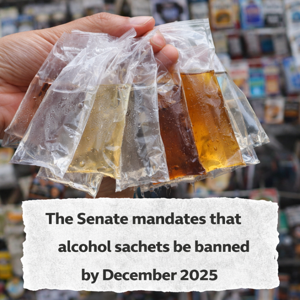
In order to stop the increasing misuse of inexpensive, high-strength alcohol by youth, the Federal Ministry of Health, the Federal Competition and Consumer Protection Commission, NAFDAC, and industry associations, such as the Association of Food, Beverage, and Tobacco Employers, signed a five-year Memorandum of Understanding in 2018 to phase out sachet and mini-bottle alcoholic drinks gradually.
Following a five-year moratorium granted by the then-Honorable Minister of Health, Prof. Isaac Folorunsho Adewole, to allow manufacturers to phase out the two packaging types, NAFDAC began enforcing the prohibition on alcohol supplied in sachets or in PET bottles containing less than 200ml on February 1, 2024.
The House Committee on Food and Drug Administration recommended that the Agency suspend the prohibition shortly after it went into effect, which had been in place for five years since all parties had signed the agreement on the moratorium.
Senator Asuquo Ekpenyong, however, made a motion of Urgent National Importance, stating that the phaseout of alcoholic beverages in sachets must not be extended further. The health, safety, and mental health of Nigerians are the motion’s main concerns.
Ekpenyong claimed in the motion that the enforcement schedule was consistent with worldwide best practices and global regulatory requirements for minimizing alcohol-related harm among Nigerians. He claimed that in 2024, the Federal Government had already given manufacturers a one-year moratorium so they could use up their current supply.
“As the December 2025 deadline approaches, certain manufacturers are lobbying for another extension, thereby undermining the regulatory process and jeopardising public health.” “We cannot continue to expose our youths to cheap, easily accessible alcohol that destroys lives and endangers public safety,” he said.
He maintained that the ongoing sale of alcoholic beverages with high content in sachet form was contributing to domestic violence, addiction, poor cognitive development, school dropouts, and an increase in traffic accidents, particularly involving commercial drivers.
In order to safeguard youth and encourage a responsible and healthy market, he urged the Senate to make sure that the December 2025 deadline is followed. He also urged the Federal Ministry of Health, the National Agency for Food and Drug Administration and Control (NAFDAC), and the National Orientation Agency to increase enforcement, publish the eagerly anticipated National Alcohol Policy, and increase nationwide awareness-raising.
Following a discussion among members, the Senate approved the resolution, ordering NAFDAC to refrain from extending the deadline of December 31, 2025, for the ban on the manufacture and distribution of alcoholic beverages in sachets.




Add comment